

From the classroom to the research desk: Apprenticeship program gives future librarians hands-on experience
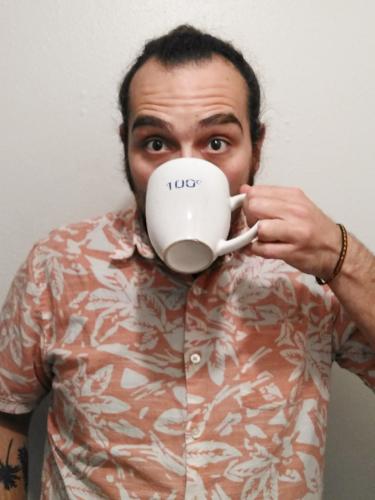
Ask A Librarian apprentice Erik Mendoza
If you have ever dropped a question into the University of Colorado Boulder Libraries Ask A Librarian (AAL) chat service during the evening or weekend, you probably received help from an AAL apprentice, a library and information science graduate student working to gain practical, hands-on professional experience as a librarian.
Each year, the University Libraries recruits one or two apprentices from library and information science graduate programs across the country. After a year gaining library experience, these apprentices will then go on to support all types of libraries nationwide by forming a talent pipeline of professional librarians.
For many academic programs, apprenticeships are a key component of preparing students for their future careers as the classroom alone can’t replicate real world experience. The Libraries apprenticeship program serves to not only give the apprentices an understanding of how academic libraries function, but also provides valuable job experience and offers mentorship and professional connections. The AAL Apprenticeship Program began in 2014.
We spoke to one of this year’s AAL apprentices, Erik Mendoza, to learn more about his experiences in the program, how it supports his career goals and how he is planning to use this knowledge to manage collections and help people access credible information.
Tell me about your role at the University Libraries. What work are you doing as part of your apprenticeship?
My role with the Libraries is twofold: The apprenticeship involves me spending 10 hours of my week running the Ask A Librarian (AAL) instant messaging service and two hours performing project work with an interdisciplinary librarian.
The AAL service is as simple as it sounds—you enter a chat service and a living, breathing librarian is there to answer your questions. If you use the service during the evening or weekend, you’ll most likely be talking to an apprentice! I’ve answered questions covering everything from Norlin’s operating hours to helping find peer-reviewed sources for a specific research project.
The apprenticeship also includes two hours of project work, which I have been using to help manage a particularly large dataset with Dr. Katie Randall, the Native American and Indigenous Studies librarian here at CU Boulder. This dataset, titled Putting the ‘I’ Back in BIPOC: Indigenous-Specific Inclusion Initiatives across Academic Libraries in the United States and Canada, was recently published and presented at the 2025 Association of College and Research Libraries Conference. It examines academic libraries' resources and services centering specifically Indigenous patrons, Indigenous Knowledge and Critical Indigenous Studies (CIS). It consists of data mapping the presence of liaison librarianship programs, specific CIS liaison librarians, curricular CIS programs and land acknowledgements from over 1,000 universities and colleges.
How did you first hear about this apprenticeship opportunity, and what motivated you to apply?
I found out about the opportunity through an email from an advisor at my Master of Library and Information Science (MLIS) school, the University of Washington. Reference work is one of my favorite parts of librarianship, and I thought it would be an excellent opportunity to strengthen my patron-facing skills. I love to solve puzzles, so helping people find exactly the right source for a research project is very satisfying. I also have family who have worked tangentially with CU Boulder in the past and I heard great things!
Are there skills that you have learned through the apprenticeship that you wouldn’t have learned in a traditional classroom setting?
Oh, yes, definitely. You can read and hear all about working with the public in class but you don’t really know the different adventures people can take you on until you’re walking with them. The flexibility and responsiveness required to jump into someone else’s problem at a moment’s notice is something that you can only gain from experiencing it firsthand.
Also, after having faced Dr. Randall’s dataset, I fear no spreadsheet be it in Google Sheets or Excel.
How has this experience shaped your future career goals, and how do you see yourself applying what you’ve learned at the library in your future job?
Both sides have shaped my interests. The IM Ask A Librarian aspect of the apprenticeship really activates the puzzle solving part of my brain and just makes me want to help people learn about the world around them.
The project work I have been doing with Dr. Randall has shown me, in a very real way, the sort of impact I can have helping people evaluate information—by putting in the work and supplying quality, accurate, practical information on a desperately needed subject in a straightforward format. It is as easy as finding your direction of attack and starting the spreadsheet.
Can you describe the mentorship or guidance you receive from your supervisor or colleagues? How does that support your learning and development?
My mentor, Reference Services Coordinator Adrienne VandenBosch, was adamant from the beginning that I would get as much out of the apprenticeship as possible. At the start of the year, as I acclimated to the instant messaging service, we would talk about what I was interested in doing and what kind of work I wanted to do post-graduation. She provided a series of contacts which she thought might have work which would interest me. Since my dream is to help repatriate stolen items, the very first person on the list was Dr. Randall, who just so happened to need help on her massive dataset. All of the interactions between Adrienne and I have been extremely natural and friendly, but she is working hard behind the scenes to make sure we leave the apprenticeship with experiences which match our interests, which is so huge!
What are you studying in your MLIS program? What career path do you hope that translates into post-graduation?
My absolute dream would be performing provenance research, the tracing of an item's origin and ownership, with the intent of repatriating items illegally or immorally held by galleries, libraries, archives and museums. In addition to the apprenticeship with CU Boulder, I am completing my capstone project which involves processing a collection of physical papers connected to a Native American art collection at an art museum’s library, and we are looking for ways to extend that project through grant applications. So wish me luck there! Most of my coursework is related to public and academic librarianship, which are both so vital to the knowledge sharing process in our culture. I would be honored to get to be a librarian anywhere.