

CU Boulder librarians step up for student creators in award-winning publication
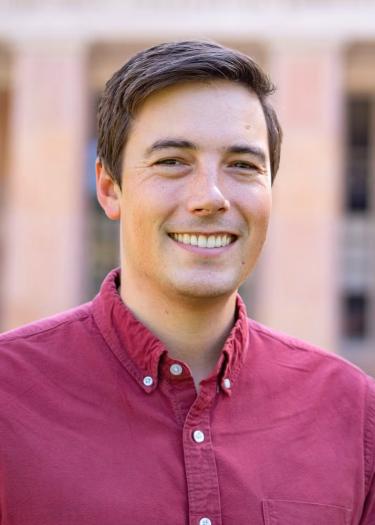
Art & Architecture Librarian Alex Watkins
Imagine you are building a concrete canoe. What information resources would you need to get the canoe to float?
In a world of concrete canoes, dissolvable textiles and adhesive biomaterials for the heart, engineering students, designers, studio artists and other creator students have unique information needs—from trade literature, patents, technical standards and how-to manuals.
Academic libraries are well-positioned to support these students and the topic of the new and innovative ways in which they are doing so is currently being tackled by CU Boulder librarians Alexander Watkins and Rebecca Kuglitsch in their—now award-winning—two-volume set, Creators in the Academic Library.
The award they received was the Worldwide Books Award for Publications from the Art Libraries Society of North America (ARLIS/NA) which recognizes outstanding publications by individual members in librarianship or visual resources curatorship and the arts.
Watkins and Kuglitsch spoke about Creators in the Academic Library and the impact they hope it will have on supporting students.
What are some common requests or needs of creator students?
Kuglitsch: One of the great things about creator students is that their research is so unique and varied. Inspiration can come from anywhere, and creator students often grapple with societal, environmental and cultural issues across disciplines. For example, if you’re designing a building you may need to draw on research as varied as local history, ecology, environmental psychology and architectural precedent. They may need a wide variety of formats such as technical standards, patents, trade publications, GIS data and scholarly articles.
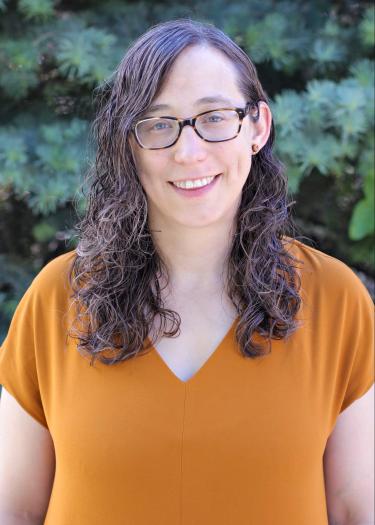
Director of Branches & Services Team Rebecca Kuglitsch
And you just won an award for your publication highlighting these needs and how libraries are meeting them. Can you tell me a little bit more about what Creators in the Academic Library addresses?
Watkins: The idea for these volumes arose out of our collaboration and work with creator students. Rebecca has worked extensively with engineers and I work with artists and designers. We noticed similarities in our experiences working with students whose academic paths focused on creating. Regardless of students’ disciplines, we noticed they were challenged to switch between the research practices of academic and creator communities. Traditional academic research, where students find information and arguments and incorporate them into original written papers, requires a specific set of skills. But those research skills don’t automatically transfer to creator research practices. Creators often need to conduct research to understand tools and techniques, spark their creative process and ground their work.
How are libraries showing up for these types of students?
Watkins: Libraries are showing up for these types of students by providing a rich range of information resources, but also by working with students to create exhibits, co-design new spaces, developing performance series, lending creation technology and more.
What work is being done at CU Boulder Libraries?
Kuglitsch: There is so much good work to support creator students at CU Boulder Libraries! If you’re a student making films, podcasts or music, you might find resources in our Multimedia Equipment Lending Library (aka MELL). We have folks who can help you find a vast breadth of materials from technical standards to create new inventions, to scores to create a new experience of a piece of music, to experts who will help you think through ethical reuse and remix. The folks at the Earth Sciences and Map Library really shine at hosting or creating exhibits that bridge arts and sciences—look for one this fall called Desire Lines: Charting Firefly Love and Light that’s part of a collaboration with NEST Studio for the Arts. Alex and I care about this deeply, but we’re far from the only ones—that’s the great thing about librarians. Most of us are passionate about finding connections, so you’ll meet librarians who are scholars and letterpress artists, for example. Shoutout to Literature and Humanities Librarian Amanda Rybin-Koob, who contributed a chapter on this experience!
How can CU Boulder faculty and students leverage the resources here?
Kuglitsch: Talk to us! Librarians love to help connect students to the varied kinds of information out there and think about the ways it can be used to inspire new work. If we’re not the right person to help, we’ll find you the right person. We also encourage exploration—the libraries offer a lot of opportunity for serendipity, whether that’s browsing an unfamiliar area or just finding inspiration when visiting a new library setting. We have five libraries on campus, and they all have their own personalities!
What do you hope the outcome of Creators in the Academic Library will have in terms of more library support for these students?
Watkins: While there is significant literature within disciplines on many of these communities’ unique information needs, there was very little on the crossover between them. We wanted to build a collection of ideas and strategies that would span the disciplines and showcase shared practices, sparking new ideas as librarians and transferring strategies for art students to engineers and vice versa. We wanted to share these ideas with the larger library community.
Since our very start at CU Boulder we’ve found our work enriched by the commonalities we found among the students we work with. We have found that there is much less of a dichotomy between arts and sciences than is often believed. By showing these underlying similarities we can enrich our practices. We hope that this will result in more tailored support for creator students, and greater collaboration between librarians that will enrich these students’ experiences of the libraries.