

archives
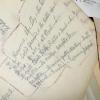 Professor of education and anthropology, Frank E. Thompson (1871-1969) facilitated acquisition by the University of Colorado of mountain property, originally named the University Camp, that later became the site for Science Lodge and research
 Theodore Dru Alison Cockerell (1866-1948), professor of zoology at the University of Colorado from 1904 to 1934, was an internationally known naturalist who researched and published prolifically in zoology, botany, ecology, and paleontology. He is
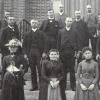 This photo from the A. A. and Laurence Paddock Photo/Negative Collection at the CU Boulder Archives looks a little too much like a modern day folk band promo, but, in fact, the image is of the 1890 class of CU. Many of the images in the Paddock
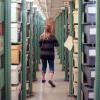 Sure you know that super interesting historic materials are housed in archives, but have you ever wondered what those archives look like? These are some images from the “stacks” located in the basement of Norlin Library. While these are not open for
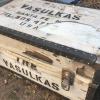 In partnership with the Vasulka Chamber at the National Gallery of Iceland, CU Boulder holds materials from the pioneering video art duo: Steina and Woody Vasulka. Steina began her creative career as a classically trained violinist and met Woody, a
 A. F. Curtis operated a hardware store in from the 1860s until 1882. He also served as a judge, was the president of the Mercantile National Bank, and was an active Republican and a member of the Clear Creek Bible Society. The A. F. Curtis
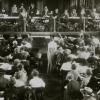 One of the longest running women’s peace organization, the Women’s International League for Peace and Freedom was established in 1915 as a reaction to World War I. Following World War I, the group took an ever broader look at the causes of war,
- The Western Federation of Miners (WFM), which in 1916 became the International Union of Mine, Mill, and Smelter Workers (IUMMSW) was, from its founding in 1893 to its merger into the United Steelworkers of America in 1967, the major American union
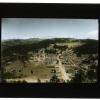 Ira D. Kneeland moved with his family from Kansas to Valmont, Colorado around 1881, and shortly thereafter to Boulder. He worked for Meile, a photographer on Pearl Street. At some point, Ira quit the gallery and went into prospecting until 1886 when
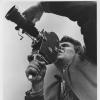 James Stanley Brakhage, better known as Stan Brakhage, was an American non-narrative filmmaker and is considered to be one of the most important figures in 20th-century experimental film. A prolific filmmaker, he made nearly 350 films in his 52-year